We all like good-looking wildlife - weird and wonderful creatures that set the pulse racing. However, I am also a fan of weirdly-named wildlife. The creatures that when you look up their name in a book gets you wondering how on earth did they come up with that? When you get the combination of the good looking, and the fantastically named it does not get much better. I was blessed to find four such specimens on my evening walk yesterday. It started when I left the house for a walk up Batch Valley and found this lurking on my front door step.
A bit of investigation tells me that this is the drinker, a moth with a name I can sometimes relate to. But this does not gets its name from being attracted to alcoholic beverages (a light ale perhaps?), but rather the caterpillars apparent liking for drops of dew. If you don't think this is an especially interesting looking creature, then look again at the comb-like antennae. Utterly remarkable.
One thing you may be able to accuse the drinker of is being legless, which is something it has in common with the next creature I discovered.
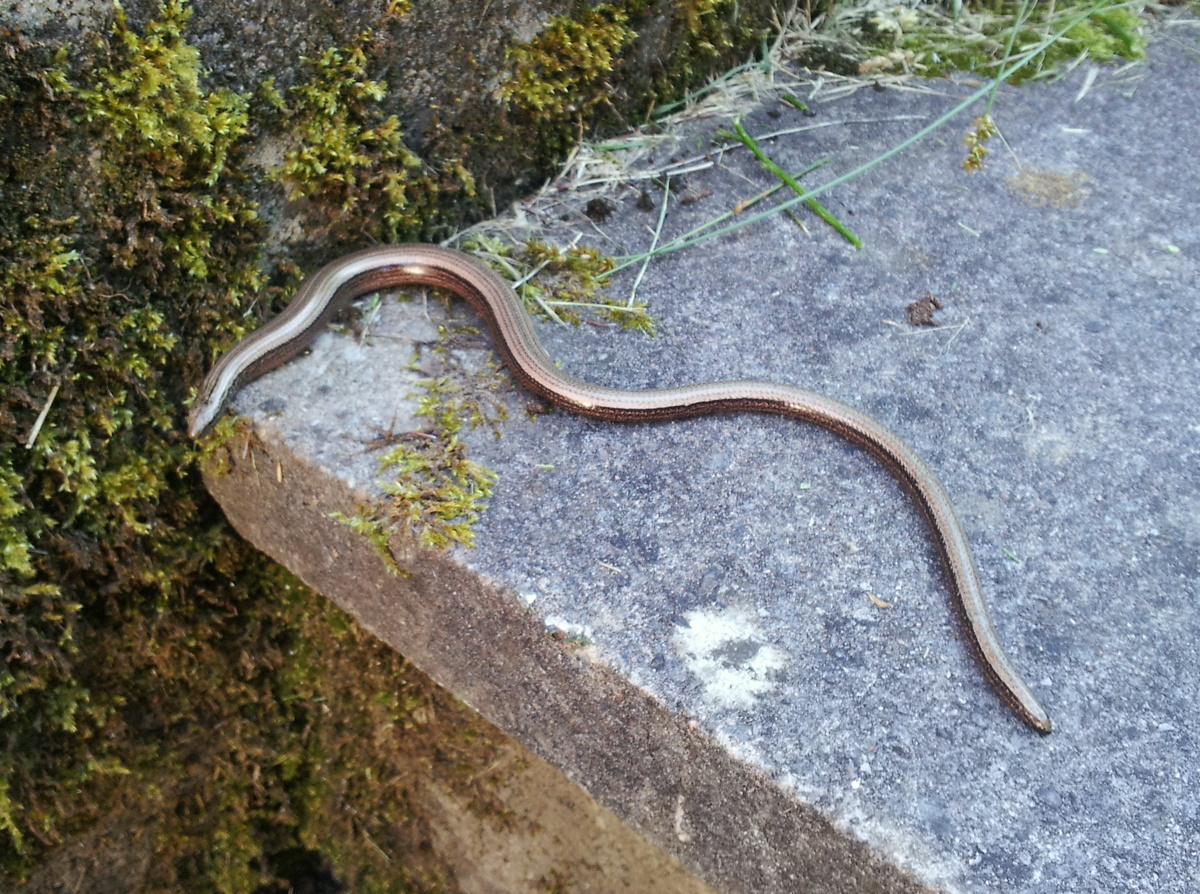
Slow worms are simply fantastic creatures. A shimmering slither of coppery irridescence, this gorgeous lizard was uncharacteristically out in the open basking on a step. Slow worms don't just look great, they are also fascinating to boot. Being a legless lizard is interesting enough, with an ability to automotize (drop their tail to you and me) when challenged by predators is another incredible adaptation. They are also a gardeners friend for their preference for munching on slugs, which seemed to be out in abundance yesterday evening.
Feeling rather chipper about my slow worm encounter I continued up Batch Valley and soon found one of these wandering across the path.
This may look like a fairly ordinary beetle, but I think all beetles are great-looking things. This has the benefit of having the best name yet - bloody-nosed beetle. It is so-called because of its habitat of producing bright red fluid from its mouth when challenged. This is both a visual deterrant and foul-tasting, so a great predator avoidance strategy. I didn't want a demonstartion of this unusual skill, so I let the beetle go quietly about its business.
On getting back to my garden it was nice to finally see some butterflies taking advantage of the flowers, after a complete absense of them for most of the year. Amongst the meadow browns was this handsome specimen.
Of course this is a red admiral, in my opinion one of our best looking insects. A familiar creature, but why is this called after a naval officer? Well, apparently it isn't. A quick look on google tells me that the name derives from a corruption of the 18th century name of 'red admirable'. I don't know if this is true, but if so this is an insect that has been admired over centuries, and rightly so.
Tuesday, 24 July 2012
Wednesday, 27 June 2012
Redstarts making themselves at home
I spent an enjoyable Sunday afternoon at the house of a friend on the edge of All Stretton. We had cups of tea, some rather delicious rock cakes and spent some time staring at a rusting air vent. After a few minutes this bird appeared with a beakful of food...
...had a quick look over her shoulder...
...then steadied herself...
...before diving in.
This is of course a female redstart, and she will be being kept busy by up to seven hungry beaks to feed in her nest inside this vent. The eggs would have taken a couple of weeks to hatch, and my guess is within another ten days the young in this nest will be fledging as it takes them about two and a half weeks to do so.
Redstarts are simply fabulous birds - they are good looking, have a gorgeous scratchy song, have an endearing habit of quivering their tails and are one of our spring-bringers. In a few months times these birds weighing 15 grammes will depart the Shropshire Hills and perhaps head for northwest Africa - British ringed birds have previously been recovered in the Gambia and Senegal. We are lucky to have them in good numbers in Shropshire, they are declining across their European range and they would have just been passing through in my old home of Oxfordshire.
If you don't think that the female redstart is a good looking bird, then have a look at the male. What a bird...
We soon left them alone, redstarts are skittish birds and this was no time to try to get close up photographs. We headed back to Batch Valley, and what did I hear opposite my house that evening? A male redstart. Perhaps I should install an air vent in the side of my house...
...had a quick look over her shoulder...
...then steadied herself...
...before diving in.
This is of course a female redstart, and she will be being kept busy by up to seven hungry beaks to feed in her nest inside this vent. The eggs would have taken a couple of weeks to hatch, and my guess is within another ten days the young in this nest will be fledging as it takes them about two and a half weeks to do so.
Redstarts are simply fabulous birds - they are good looking, have a gorgeous scratchy song, have an endearing habit of quivering their tails and are one of our spring-bringers. In a few months times these birds weighing 15 grammes will depart the Shropshire Hills and perhaps head for northwest Africa - British ringed birds have previously been recovered in the Gambia and Senegal. We are lucky to have them in good numbers in Shropshire, they are declining across their European range and they would have just been passing through in my old home of Oxfordshire.
If you don't think that the female redstart is a good looking bird, then have a look at the male. What a bird...
We soon left them alone, redstarts are skittish birds and this was no time to try to get close up photographs. We headed back to Batch Valley, and what did I hear opposite my house that evening? A male redstart. Perhaps I should install an air vent in the side of my house...
Monday, 28 May 2012
Welcome
Welcome to Batch Valley Wildlife, my blog celebrating the natural world of this beautiful corner of Shropshire. Batch Valley is the entry point from the village of All Stretton to the Long Mynd, part of the Shropshire Hills Area of Outstanding Natural Beauty. It lives up to this description and I moved to All Stretton in spring 2012, captivated by the beautiful landscapes, plentiful wildlife and the rich colours of the natural environment.
This blog will describe what I find as I get to know the Shropshire Hills and I hope you find something of interest. Please bear with me to start with as it may take me a little while to get going, as I am busy with house renovation and have limited internet access at present. I will eventually be blogging regularly and hope that you come back to visit.
Subscribe to:
Posts (Atom)


